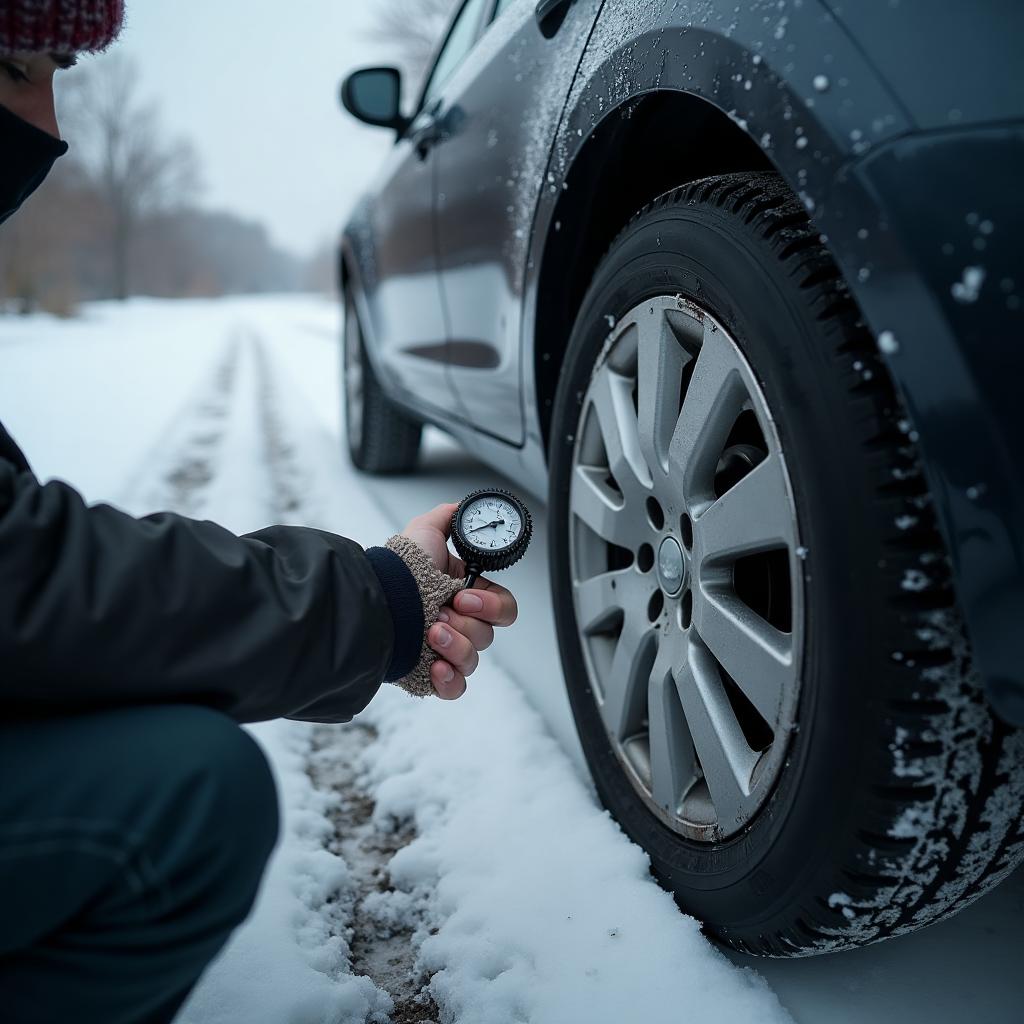
If your tire pressure warning light comes on during the first cold snap of the season, you're not alone. This is one of the most common tire-related questions, and the science behind it is straightforward.
Air follows the ideal gas law — when temperature drops, the air molecules inside your tires move slower and take up less space, reducing pressure. For every 10°F (5.5°C) drop in temperature, tire pressure decreases by approximately 1 PSI.
This means if your tires were properly inflated at 32 PSI during summer (80°F), they could read as low as 28 PSI on a cold winter morning (40°F). That's enough to trigger your TPMS warning light.
Low tire pressure is more than an annoyance — it reduces fuel economy, accelerates tire wear on the edges, and can compromise handling and braking. In winter conditions, proper inflation is even more critical for safety.
Check your tire pressure at least monthly during cold months, and always when tires are cold (before driving or after sitting for 3+ hours). The Goodyear tire care guide recommends inflating to the pressure on your door placard, not the maximum on the sidewall.