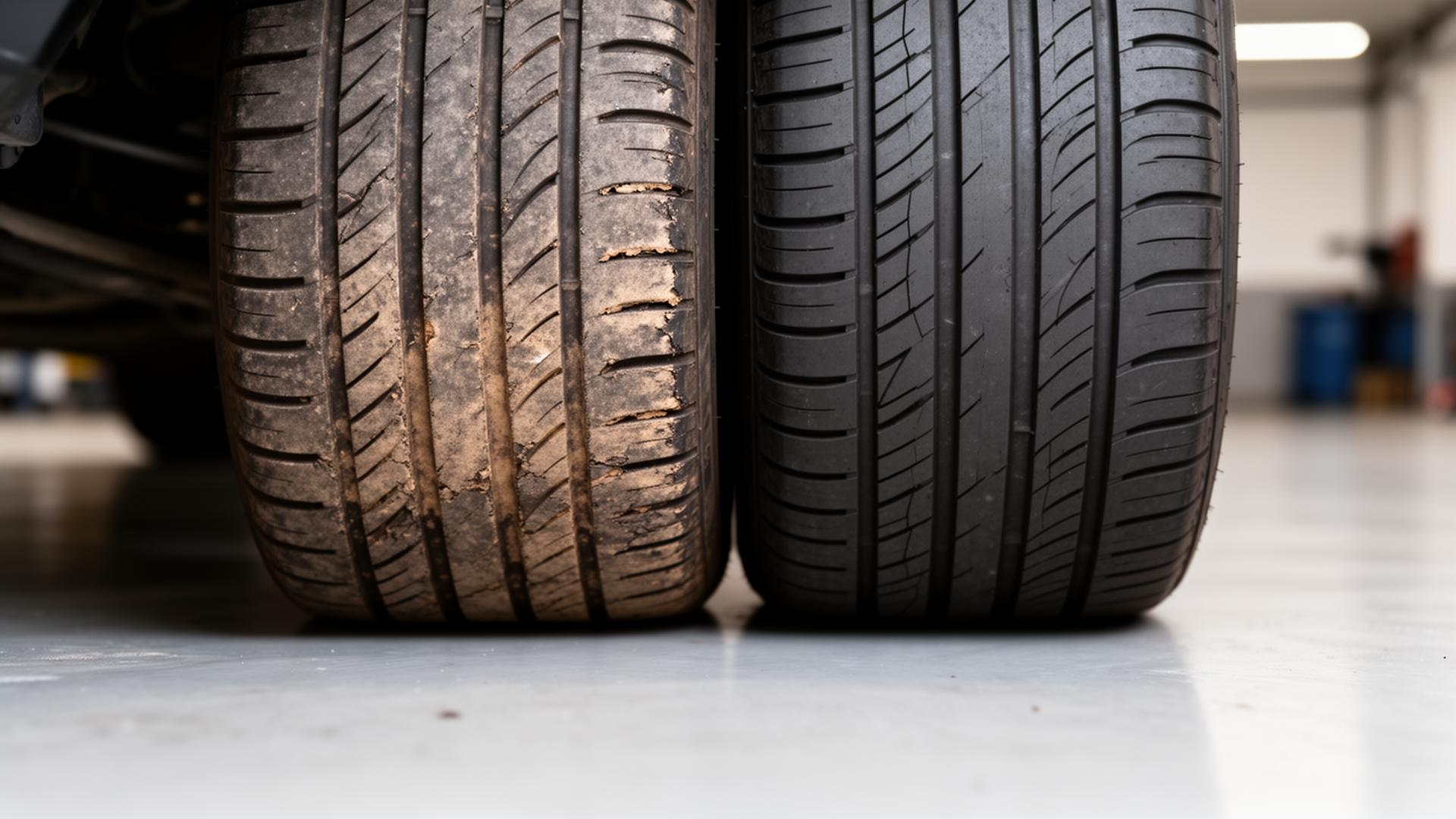
Tire lifespan depends on a combination of mileage, age, and condition. Even if your tread looks fine, tires older than 6 years should be inspected annually, and most manufacturers recommend replacing any tire older than 10 years regardless of appearance.
The National Highway Traffic Safety Administration (NHTSA) warns that rubber compounds degrade over time due to oxidation, UV exposure, and heat cycling — even on tires that are rarely driven. This aging weakens the internal structure and increases the risk of sudden failure.
Mileage-wise, most all-season tires are rated for 50,000 to 70,000 miles, while high-performance and summer tires may only last 25,000 to 40,000 miles. Premium brands like Michelin and Continental often offer treadwear warranties of 60,000 to 80,000 miles on their touring models.
Several factors accelerate tire wear: aggressive driving and hard braking, underinflation or overinflation, skipping tire rotations, misaligned wheels, and extreme heat. Conversely, regular rotations every 5,000–7,500 miles, maintaining proper pressure, and balanced alignment can add tens of thousands of miles to your tires.
To check if your tires need replacing, use the penny test: insert a penny into the tread groove with Lincoln's head facing down. If you can see the top of his head, your tread depth is below 2/32" and it's time for new tires. The Tire Rack replacement guide recommends replacing at 4/32" for improved wet-weather safety.
Don't forget to check the DOT date code on your tire sidewall — it's a four-digit number where the first two digits are the week and the last two are the year of manufacture. For example, "2521" means the tire was made in the 25th week of 2021.