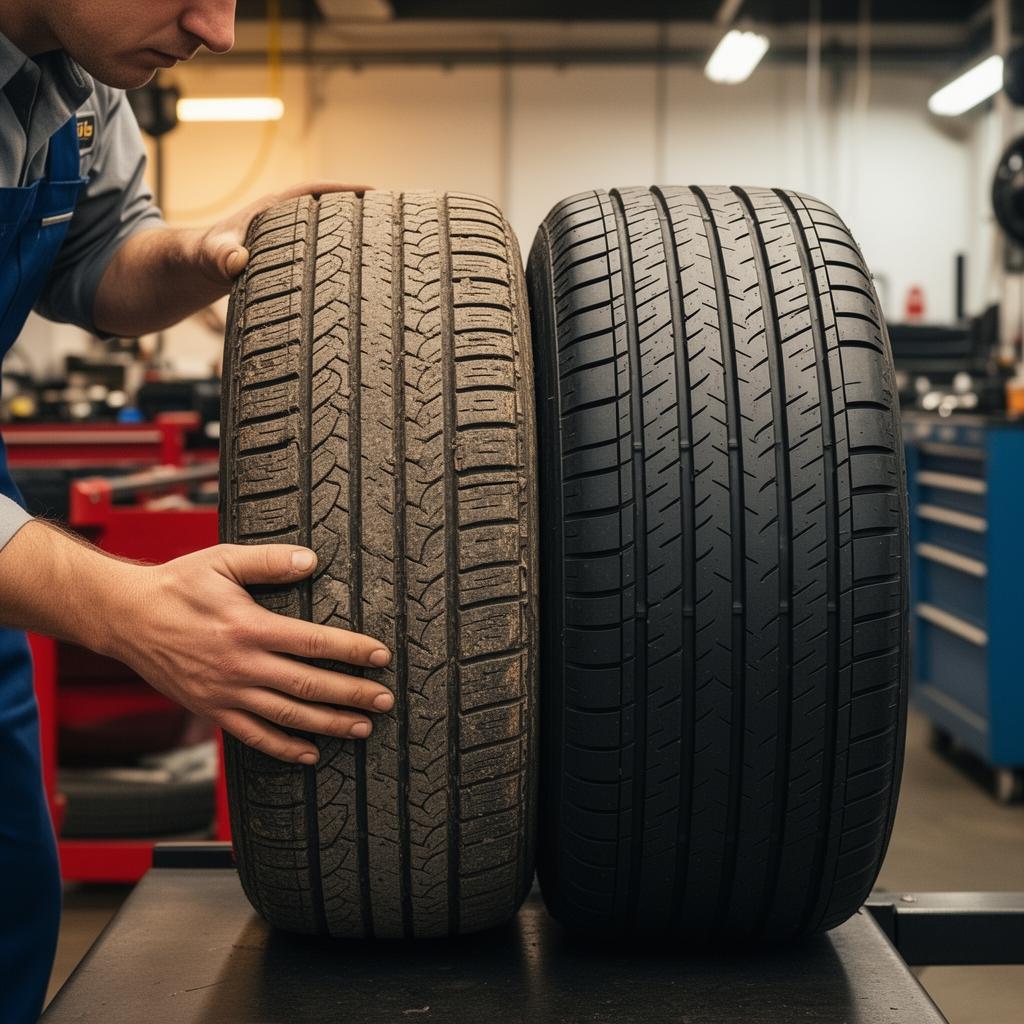
Knowing when to replace tires is one of the most important safety decisions a vehicle owner makes. Worn tires are a factor in thousands of crashes each year, yet many drivers push their tires well past safe limits. This guide covers every tire replacement sign you need to watch for, backed by data from the National Highway Traffic Safety Administration (NHTSA).
The 2/32″ Tread Depth Rule
All 50 U.S. states consider a tire legally worn out at 2/32″ of remaining tread depth. At that point, built-in tread wear indicator bars — small raised rubber strips molded into the grooves — sit flush with the tread surface, providing a clear visual signal. According to Goodyear's replacement guide, tires at 2/32″ lose the ability to channel water effectively, dramatically increasing hydroplaning risk.
Many safety experts recommend replacing tires at 4/32″ rather than waiting for the legal minimum, especially if you frequently drive in rain or snow. At 4/32″, wet braking distances are already 30–40% longer than with new tires.
7 Tire Replacement Signs to Watch For
| Warning Sign | What to Look For | Severity |
|---|---|---|
| Visible wear bars | Bars flush with tread surface across any section | Replace immediately |
| Sidewall cracks or cuts | Visible lines, grooves, or splits in the sidewall rubber | Replace immediately |
| Bulges or blisters | Raised bumps on the sidewall indicating internal damage | Replace immediately |
| Uneven tread wear | One side or center worn more than the rest | Inspect & align |
| Vibration at highway speed | Steering wheel or seat shakes above 50 mph | Inspect soon |
| Age over 6 years | Check DOT date code on sidewall (4-digit number) | Plan replacement |
| Frequent pressure loss | Tire loses more than 3 PSI per month consistently | Inspect soon |
Tire Age: The Hidden Expiration Date
Even tires with plenty of tread can become unsafe with age. Rubber compounds degrade over time due to UV exposure, heat, and oxidation. The NHTSA recommends inspecting tires annually after they reach 5 years old and replacing any tire older than 10 years. Most tire manufacturers, including Bridgestone, recommend replacement at 6–10 years regardless of remaining tread.
To find your tire's age, look for the DOT code on the sidewall. The last four digits indicate the week and year of manufacture — for example, "2523" means the tire was made in the 25th week of 2023.
The Penny Test vs. the Quarter Test
The classic penny test is simple: insert a penny into the tread groove with Lincoln's head facing down. If you can see the top of Lincoln's head, the tread is at or below 2/32″ and the tire needs replacing. For a more conservative check, use a quarter instead — if Washington's head is visible, the tread is at or below 4/32″, which many experts consider the safer replacement threshold for wet-weather driving.
Uneven Wear Patterns and What They Mean
Center wear: The middle of the tread is worn smooth while the edges still have tread. This typically indicates over-inflation — the tire rides on its center, wearing it faster.
Edge wear: Both outer edges are worn more than the center. This usually signals under-inflation, which causes the tire to flex and puts extra load on the shoulders.
One-sided wear: Only one edge is worn. This is the hallmark of a misaligned vehicle, particularly excessive camber or toe angle. Have your alignment checked before installing new tires.
Cupping or scalloping: Wavy, uneven dips around the tread surface. This pattern is often caused by worn suspension components (shocks or struts) and requires a suspension inspection before replacement.
How Many Tires Should You Replace at Once?
Ideally, replace all four tires at once for balanced handling and traction. If that's not feasible, replace at least two at a time and always install the newer tires on the rear axle — even on front-wheel-drive vehicles. According to Goodyear, placing newer tires on the rear helps maintain vehicle stability and reduces the risk of oversteer in wet conditions.
Proper Tire Pressure and Tire Life
Maintaining proper tire pressure is one of the easiest ways to extend tire life. Under-inflated tires wear faster on the edges and generate excess heat, while over-inflated tires wear the center prematurely. Check your pressure monthly and always inflate to the vehicle manufacturer's specification found on the driver's door placard — not the maximum pressure stamped on the tire sidewall.
Frequently Asked Questions
How long do tires typically last? Most all-season tires last 40,000–70,000 miles depending on driving habits, alignment, and maintenance. High-performance tires may last only 25,000–40,000 miles due to softer rubber compounds.
Can I drive on a tire with sidewall damage? No. Sidewall cracks, cuts, or bulges compromise the tire's structural integrity and can lead to sudden blowouts. Replace the tire immediately.
Is it safe to buy used tires? Used tires carry significant risk. You can't verify their history — they may have been run flat, improperly repaired, or stored in damaging conditions. If budget is a concern, look for entry-level new tires rather than used ones.
Do I need to replace my spare tire too? Yes. Spare tires age just like the rest. Check the DOT date code and replace any spare older than 10 years. Also verify that it's properly inflated — most compact spares require 60 PSI.