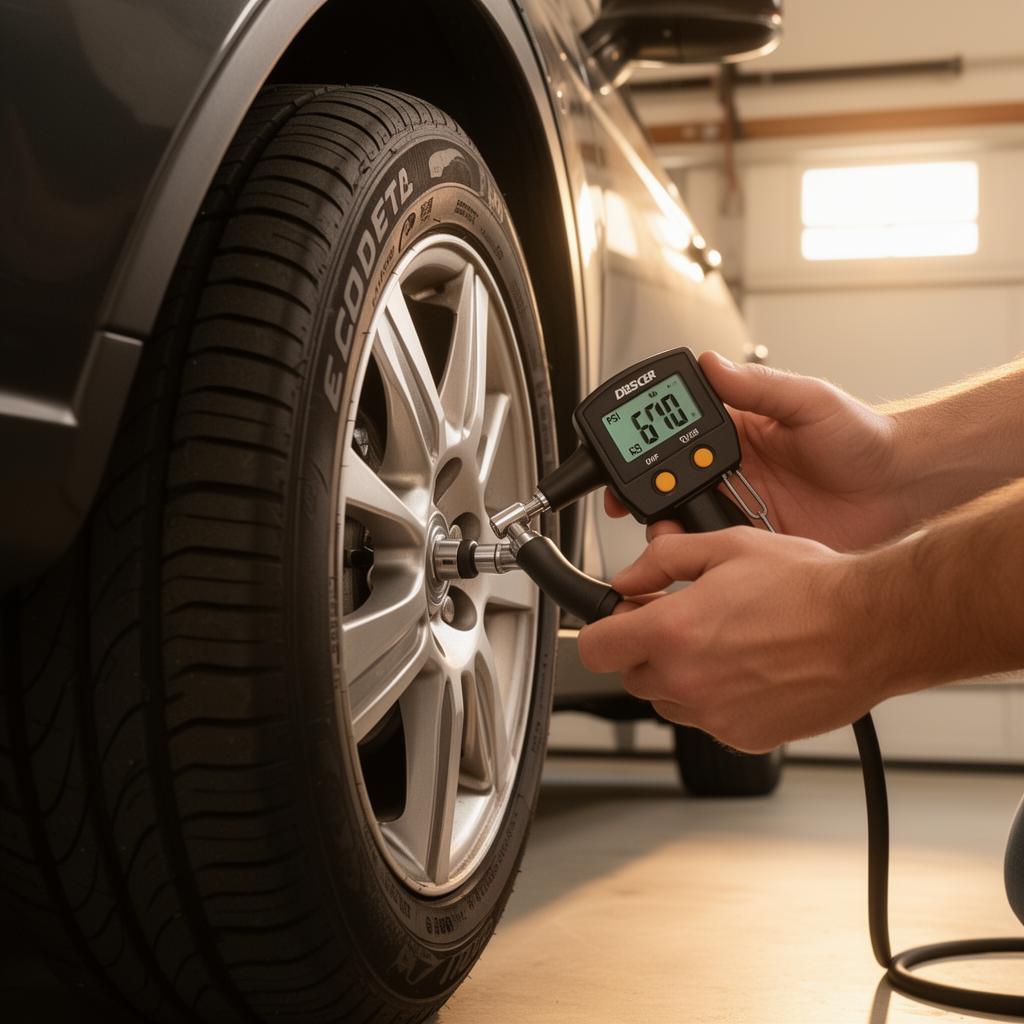
Maintaining proper tire pressure is one of the easiest and most impactful things you can do for your vehicle's safety, fuel economy, and tire longevity. Yet studies show that nearly one in three cars on the road has at least one significantly underinflated tire. Here's exactly how to check tire pressure and keep your tires at the optimal PSI.
What You Need to Check Tire Pressure
You only need one tool: a tire pressure gauge. There are three types — stick (pencil), dial, and digital. Digital gauges are the most accurate and easiest to read, typically costing $5–$15 at any auto parts store. The NHTSA recommends checking tire pressure at least once a month and before long trips.
Step-by-Step: How to Check Tire Pressure
Step 1: Check when tires are cold. Tire pressure readings are most accurate when tires are "cold" — meaning the car has been parked for at least 3 hours or driven less than a mile. Driving heats the air inside the tire, which temporarily increases the PSI reading and can give you a false sense of proper inflation.
Step 2: Find your recommended PSI. Open the driver's side door and look for a yellow or white sticker on the door jamb — this is your tire information placard. It lists the manufacturer's recommended pressure for front and rear tires (they may differ). This is the number you should target, not the "Max PSI" stamped on the tire sidewall.
Step 3: Remove the valve cap. Unscrew the small cap on the tire's valve stem. Set it somewhere you won't lose it — a pocket works best.
Step 4: Press the gauge onto the valve stem. Press the gauge head firmly and squarely onto the valve stem. You should hear a brief hiss as air enters the gauge. If the hissing continues, reposition the gauge for a tighter seal. Read the measurement displayed on the gauge.
Step 5: Compare and adjust. If the reading is below your recommended PSI, add air using a compressor at a gas station or with a portable inflator. If it's above, press the small pin inside the valve stem briefly to release air, then re-check. Repeat for all four tires — and don't forget the spare.
Step 6: Replace the valve cap. Screw the valve cap back on to keep dirt and moisture out of the valve mechanism.
What Is the Proper Tire Pressure?
Most passenger cars recommend between 30 and 35 PSI, while trucks and SUVs typically range from 35 to 45 PSI. However, the correct pressure varies by vehicle, not by tire. Two identical tires on different vehicles may require different pressures based on the vehicle's weight and suspension design.
| Vehicle Type | Typical Front PSI | Typical Rear PSI | Where to Find |
|---|---|---|---|
| Sedan / Compact | 32–35 | 32–35 | Door jamb placard |
| Crossover / SUV | 33–36 | 33–36 | Door jamb placard |
| Pickup Truck | 35–44 | 35–44 | Door jamb placard |
| Sports Car | 30–34 | 32–36 | Door jamb placard |
Signs of Incorrect Tire Pressure
Underinflation is the more dangerous condition. It causes the tire's edges to bear excess load, leading to accelerated shoulder wear, increased rolling resistance (which reduces fuel economy by up to 3%), and excessive heat buildup that can lead to blowouts. The Goodyear tire care guide notes that underinflated tires are a leading cause of tire failure on highways.
Overinflation causes the center of the tread to bulge and wear faster than the edges. It also reduces the contact patch, decreasing grip — especially in wet conditions. An overinflated tire is more susceptible to damage from potholes and road debris.
How Often Should You Check Tire Pressure?
Check your tire pressure at least once a month and before any long road trip. Temperature changes affect pressure significantly — tires lose approximately 1 PSI for every 10°F drop in ambient temperature. During seasonal transitions from fall to winter, you may need to add air multiple times.
Your vehicle's TPMS (Tire Pressure Monitoring System) warning light is a backup, not a substitute for regular checks. Most TPMS systems only alert you when pressure drops 25% below the recommended level — by that point, you've already been driving on significantly underinflated tires.
Tire Pressure FAQ
Should I use the PSI on my tire or my door? Always use the number on your door jamb placard. The number on the tire sidewall is the maximum pressure the tire can safely hold, not the ideal operating pressure for your vehicle.
Can I check tire pressure at a gas station? Yes, but your tires won't be cold after driving to the station. For a rough check, add 1–2 PSI to account for heat buildup from driving. For the most accurate reading, use a gauge at home before driving.
Do I need to check my spare tire? Absolutely. Spare tires lose pressure over time just like mounted tires. A flat spare when you have a roadside emergency defeats its purpose. Most compact spares require 60 PSI — check your owner's manual for the exact specification.