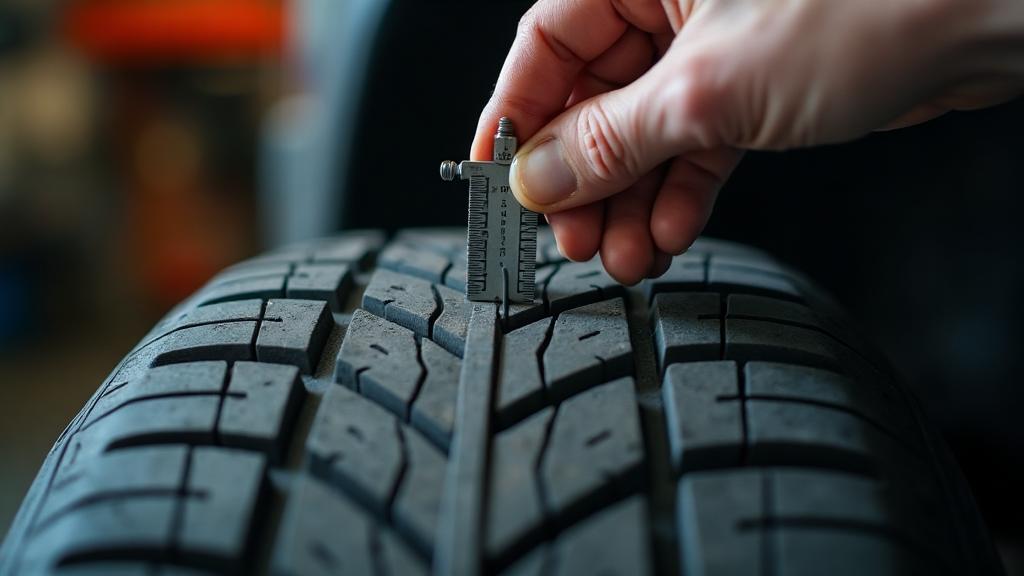
Tire tread depth is one of the most critical — and most overlooked — safety measurements on your vehicle. The grooves in your tires channel water, snow, and debris away from the contact patch, and as they wear down, your stopping distance increases dramatically. Knowing how to measure tire tread and when to replace tires based on tread depth can keep you and your passengers safe.
What Is Tire Tread Depth?
Tread depth is the vertical distance from the top of the tire's rubber to the bottom of its deepest grooves, measured in 32nds of an inch (in the U.S.) or millimeters. New passenger car tires typically ship with 10/32" to 11/32" of tread, while many light-truck and SUV tires start with 11/32" to 15/32" due to their deeper, more aggressive tread patterns.
As you drive, the rubber gradually wears away. The rate of wear depends on driving style, tire quality, road surfaces, alignment, inflation pressure, and whether you keep up with regular tire rotations. Understanding your tire size also helps you interpret tread specifications correctly.
How to Measure Tire Tread Depth
There are three reliable ways to check your tread, ranging from a quick roadside check to a precise measurement.
1. The Penny Test — Insert a U.S. penny into the tread groove with Lincoln's head pointing down. If you can see the top of Lincoln's head, your tread is at or below 2/32" and the tire needs immediate replacement. For a more conservative check, use a quarter — if you can see the top of Washington's head, your tread is at or below 4/32" and you should start shopping.
2. Tread Depth Gauge — A dedicated tread depth gauge (available for under $5 at any auto parts store) gives you an exact measurement in 32nds of an inch. Insert the probe into the deepest groove, press the shoulders flat against the tread, and read the scale. Measure at multiple points across the tire and at different locations around the circumference to check for uneven wear.
3. Built-In Tread Wear Indicators — Every tire sold in the U.S. has molded wear bars (also called wear indicators) built into the grooves. These are small raised bridges sitting at 2/32". When the surrounding tread wears flush with these bars, the tire has reached its legal minimum and must be replaced.
Tire Tread Depth Chart
The chart below shows new tread depths for common tire categories, along with recommended replacement thresholds and estimated mileage remaining at each depth.
| Tread Depth | Condition | Wet Braking | Action |
|---|---|---|---|
| 10/32" – 11/32" | New tire | Excellent | No action needed |
| 8/32" – 9/32" | Lightly worn | Very good | Continue monitoring |
| 6/32" – 7/32" | Half-worn | Good | Monitor more frequently |
| 5/32" | Approaching limit | Reduced — snow performance drops significantly | Plan replacement if driving in snow |
| 4/32" | Worn | Noticeably reduced — 30%+ longer wet stops | Replace for wet/winter safety |
| 3/32" | Critically worn | Poor — hydroplaning risk increases | Replace immediately |
| 2/32" or less | Legal minimum | Unsafe — minimal water evacuation | Illegal in most states — replace now |
Tread Depth by Tire Type & Size
Not all tires start with the same amount of tread. Larger truck and SUV tires generally have deeper grooves to handle heavier loads and rougher terrain, while passenger car tires prioritize road noise and fuel efficiency with shallower tread.
| Tire Type / Size | New Tread Depth | Replace At | Example Vehicles |
|---|---|---|---|
| Passenger (205/55R16) | 10/32" | 4/32" | Civic, Corolla, Mazda3 |
| Touring (225/65R17) | 10/32" – 11/32" | 4/32" | RAV4, CR-V, Forester |
| All-Terrain (265/70R17) | 12/32" – 13/32" | 4/32" – 6/32" | Tacoma, Colorado, Ranger |
| All-Terrain (275/70R17) | 12/32" – 14/32" | 4/32" – 6/32" | F-150, Sierra, Tundra |
| All-Terrain (285/70R17) | 13/32" – 15/32" | 5/32" – 6/32" | RAM 1500, Wrangler |
| Mud-Terrain (LT) | 15/32" – 18/32" | 6/32" | Off-road trucks, Jeeps |
| Performance (225/45R17) | 9/32" – 10/32" | 4/32" | BMW 3 Series, VW GTI |
| Winter (various) | 11/32" – 13/32" | 5/32" – 6/32" | All vehicles in cold climates |
When to Replace Tires: The 2/32" vs 4/32" Debate
In most U.S. states, the legal minimum tread depth is 2/32". Driving on tires below this threshold is not only illegal — it's genuinely dangerous. At 2/32", tires have virtually no ability to channel water, making hydroplaning a near-certainty in rain.
However, waiting until 2/32" is widely considered too late. Research from Tire Rack shows that wet-weather stopping distance increases by over 100 feet when comparing new tires to tires at 2/32". At 4/32", wet performance begins to decline noticeably — which is why most tire safety experts and organizations like AAA recommend using 4/32" as a practical replacement threshold.
For drivers in snowy climates, the bar is even higher. Snow traction drops off sharply below 5/32" to 6/32", because the shallower grooves can no longer pack and release snow effectively. If you rely on your tires in winter conditions, consider replacing at 5/32" or switching to dedicated winter tires. Also check your tire pressure in cold weather, since underinflation accelerates tread wear.
What Causes Uneven Tread Wear?
If your tread depth measurements vary significantly across the tire or between tires, you likely have an alignment, inflation, or suspension issue. Here are the most common patterns:
Center wear — The middle of the tread is more worn than the edges. This almost always indicates overinflation. Reduce pressure to the manufacturer's recommended PSI found on your door jamb placard.
Edge wear (both sides) — Both outer edges are worn more than the center. This is the hallmark of underinflation, which causes the tire to sag and overload the shoulders. Check and correct your tire pressure.
One-sided edge wear — Only one edge (inner or outer) is worn. This signals a wheel alignment problem — specifically, excessive camber or toe. Get an alignment check as soon as possible to prevent further damage.
Cupping or scalloping — Irregular, scooped-out patches around the tire. This usually points to worn shocks, struts, or other suspension components. Have your suspension inspected.
How to Extend Your Tire Tread Life
Getting the most mileage from your tires comes down to consistent maintenance. Rotate tires every 5,000 to 7,500 miles to equalize wear across all four positions. Maintain proper inflation — check monthly and before long trips. Get a wheel alignment annually or whenever you notice pulling or uneven wear. Avoid aggressive acceleration, hard braking, and high-speed cornering that scrub rubber unnecessarily.
Choosing the right tire for your driving conditions also matters. An all-terrain tire on a highway commuter will wear faster than a touring tire designed for that purpose, and vice versa. Match your tire to your actual driving habits for the best combination of performance and longevity.