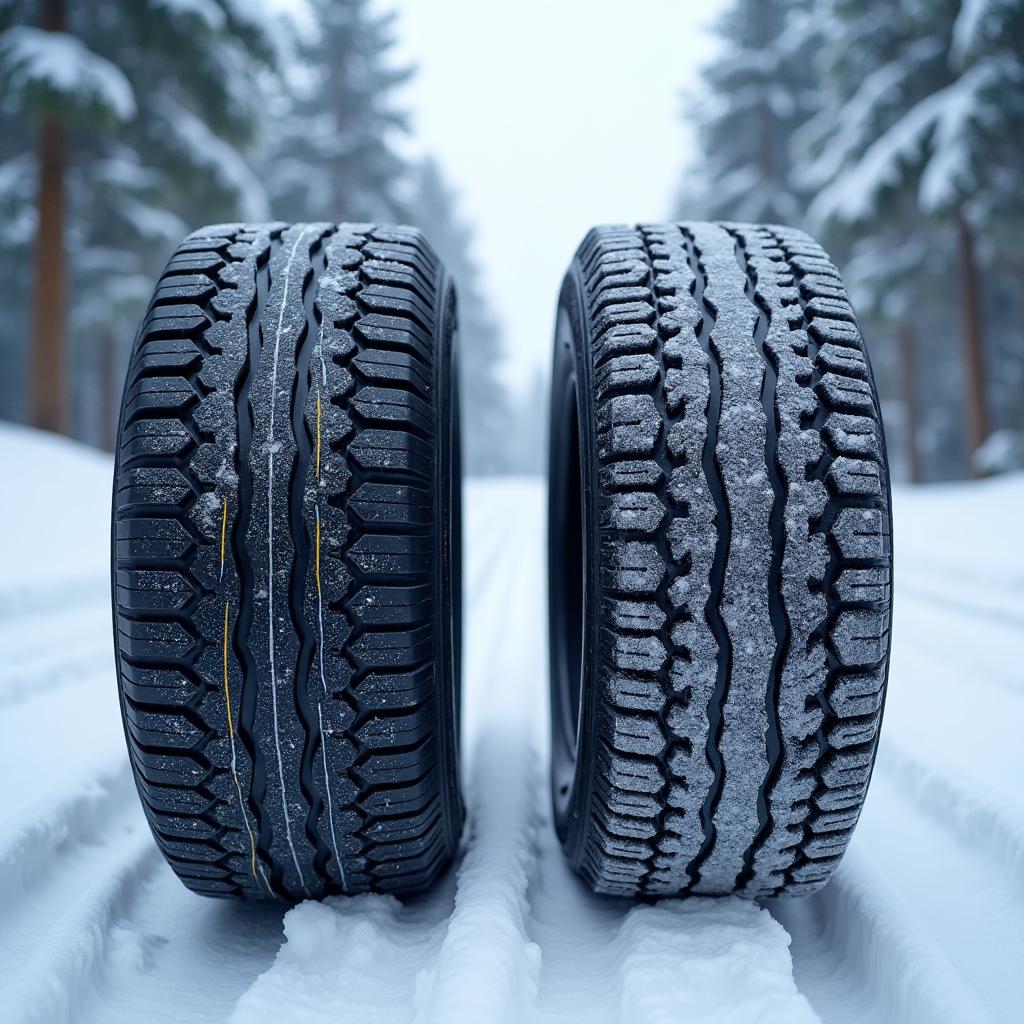
The debate between winter tires and all-season tires comes down to one key factor: how cold does it get where you live? All-season tires are a compromise designed to work adequately in most conditions, but they have significant limitations.
Winter tires use a softer rubber compound that stays flexible below 45°F (7°C). According to Consumer Reports testing, all-season tire rubber hardens in cold temperatures, drastically reducing grip. Even on dry, cold pavement, winter tires stop significantly shorter.
On snow and ice, the difference is dramatic. Winter tires feature unique tread patterns with thousands of tiny sipes that bite into snow and ice. AAA testing shows winter tires can stop up to 30-50% shorter than all-season tires in snowy conditions.
However, if you live in a mild climate where temperatures rarely drop below 45°F and snow is rare, all-season tires are the practical choice. Running winter tires in warm weather wears them out quickly and actually reduces performance.
The ideal setup for cold-climate drivers is two sets of tires: winter tires mounted on a separate set of wheels for easy seasonal swaps, and summer or all-season tires for warmer months. This actually extends the life of both sets.