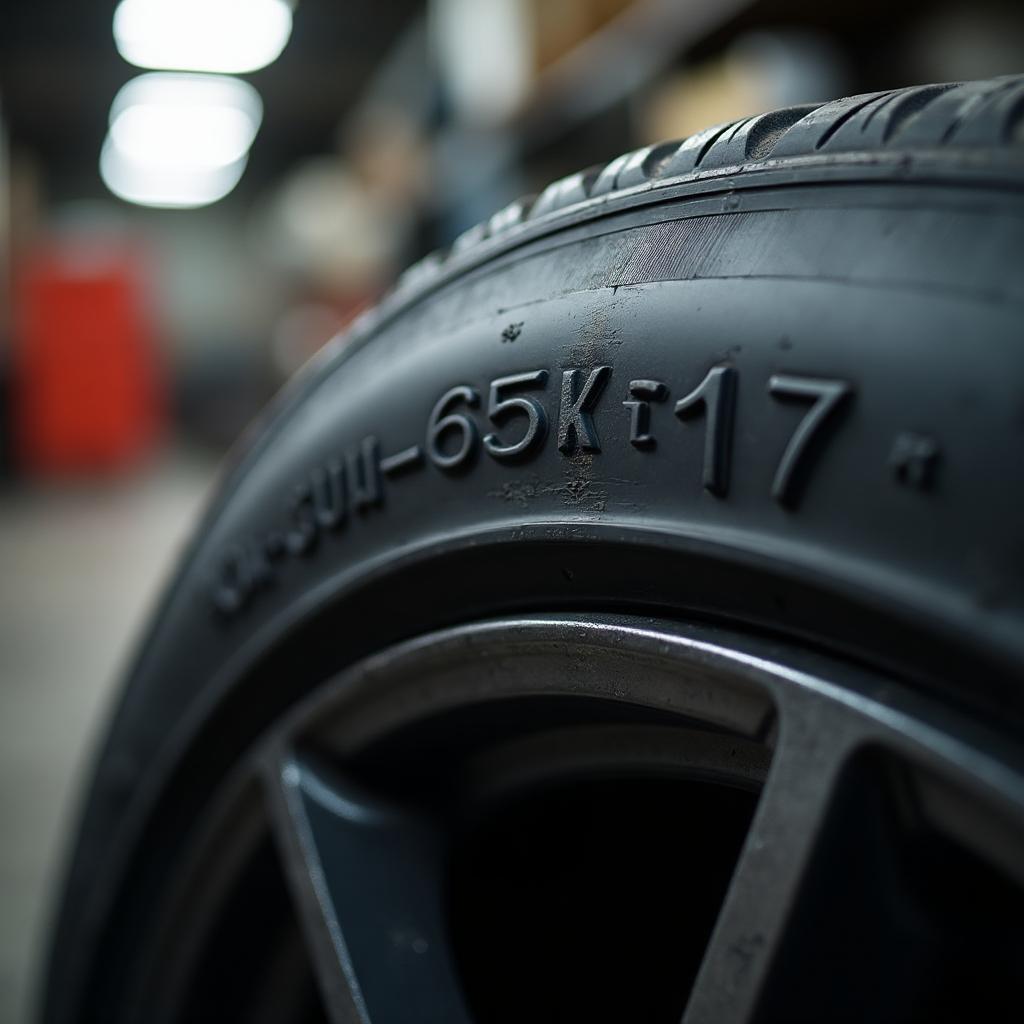
Every tire has a sequence of numbers and letters on its sidewall that tells you everything about its dimensions. Understanding these numbers helps you buy the correct replacement tires and avoid costly mistakes.
Breaking Down a Tire Size: 225/45R17 91V
Let's break down a common tire size: 225/45R17 91V. The first number, 225, is the tire width in millimeters measured from sidewall to sidewall. Wider tires generally offer better grip but can affect fuel economy.
The number after the slash, 45, is the aspect ratio — the height of the sidewall as a percentage of the width. A 45 means the sidewall height is 45% of 225mm (about 101mm). Lower numbers mean a shorter, sportier sidewall with sharper handling, while higher numbers like 70 or 75 provide a cushier ride.
The letter R indicates radial construction, which is the standard for virtually all modern passenger tires. You may rarely see B (bias-ply) or D (diagonal) on specialty or trailer tires. The number 17 is the wheel diameter in inches that this tire fits.
The final codes, 91V, indicate the load index and speed rating. The load index 91 means each tire can support up to 1,356 lbs. The speed rating V means the tire is rated for sustained speeds up to 149 mph. Always match or exceed your vehicle manufacturer's recommended ratings.
What Does the P or LT Mean?
Some tire sizes start with a letter prefix. P (e.g., P225/65R17) stands for P-Metric and indicates a passenger vehicle tire built to U.S. standards. LT (e.g., LT265/70R17) stands for Light Truck and is designed for heavier loads, truck beds, and towing. If your vehicle came with LT tires from the factory, always replace them with LT-rated tires — switching to P-Metric can compromise load capacity and safety.
Popular Tire Sizes Explained
If you drive a truck or SUV, you've likely encountered sizes like 265/70R17, 275/70R17, or 285/70R17. These three sizes are among the most popular for mid-size and full-size trucks, but the differences between them matter more than you might think.
A 265/70R17 tire is approximately 31.6 inches tall and 10.4 inches wide — the factory size on many trucks like the Toyota Tacoma and Chevrolet Colorado. It offers a good balance between on-road comfort and off-road capability without requiring lift modifications.
Stepping up to a 275/70R17 adds about 0.4 inches of width and 0.3 inches of overall diameter. This modest increase improves traction and gives a slightly more aggressive stance. Most trucks can accommodate this size without rubbing issues.
The 285/70R17 is a true 33-inch tire (approximately 32.7 inches tall and 11.2 inches wide). Popular on the Ford F-150, RAM 1500, and Jeep Wrangler, this size often represents the largest you can fit without a leveling kit or lift. It delivers noticeably better off-road grip but may slightly reduce fuel economy and acceleration.
Tire Size Chart: Common Sizes at a Glance
| Tire Size | Overall Diameter | Width | Common Vehicles |
|---|---|---|---|
| 205/55R16 | 24.9" | 8.1" | Civic, Corolla, Mazda3 |
| 215/60R16 | 26.2" | 8.5" | Camry, Accord, Altima |
| 225/45R17 | 25.0" | 8.9" | BMW 3 Series, VW GTI |
| 225/65R17 | 28.5" | 8.9" | RAV4, CR-V, Forester |
| 245/75R16 | 30.5" | 9.6" | Wrangler, 4Runner |
| 265/70R17 | 31.6" | 10.4" | Tacoma, Colorado, Ranger |
| 275/70R17 | 31.9" | 10.8" | F-150, Sierra, Tundra |
| 285/70R17 | 32.7" | 11.2" | F-150, RAM 1500, Wrangler |
| 275/55R20 | 31.9" | 10.8" | Tahoe, Expedition, Yukon |
| 305/55R20 | 33.2" | 12.0" | RAM 2500, Super Duty |
Speed Rating & Load Index Explained
The speed rating letter tells you the maximum sustained speed a tire is engineered to handle. Common ratings include S (112 mph), T (118 mph), H (130 mph), V (149 mph), W (168 mph), and Y (186 mph). For everyday driving, matching your vehicle's factory rating is sufficient — you don't need Y-rated tires on a family SUV.
The load index is equally important, especially for trucks and SUVs. It's a numerical code representing the maximum weight each tire can carry. A load index of 110, for example, supports 2,337 lbs per tire. Never downgrade your load index below the vehicle manufacturer's specification, particularly if you tow or haul cargo.
How to Find Your Correct Tire Size
The easiest way to find your recommended tire size is the placard on your driver's side door jamb — it lists the original tire size, recommended pressure, and load rating. You'll also find it in your owner's manual. If you're considering a different size for aesthetic or performance reasons, consult a tire professional to ensure proper fitment, clearance, and speedometer accuracy.