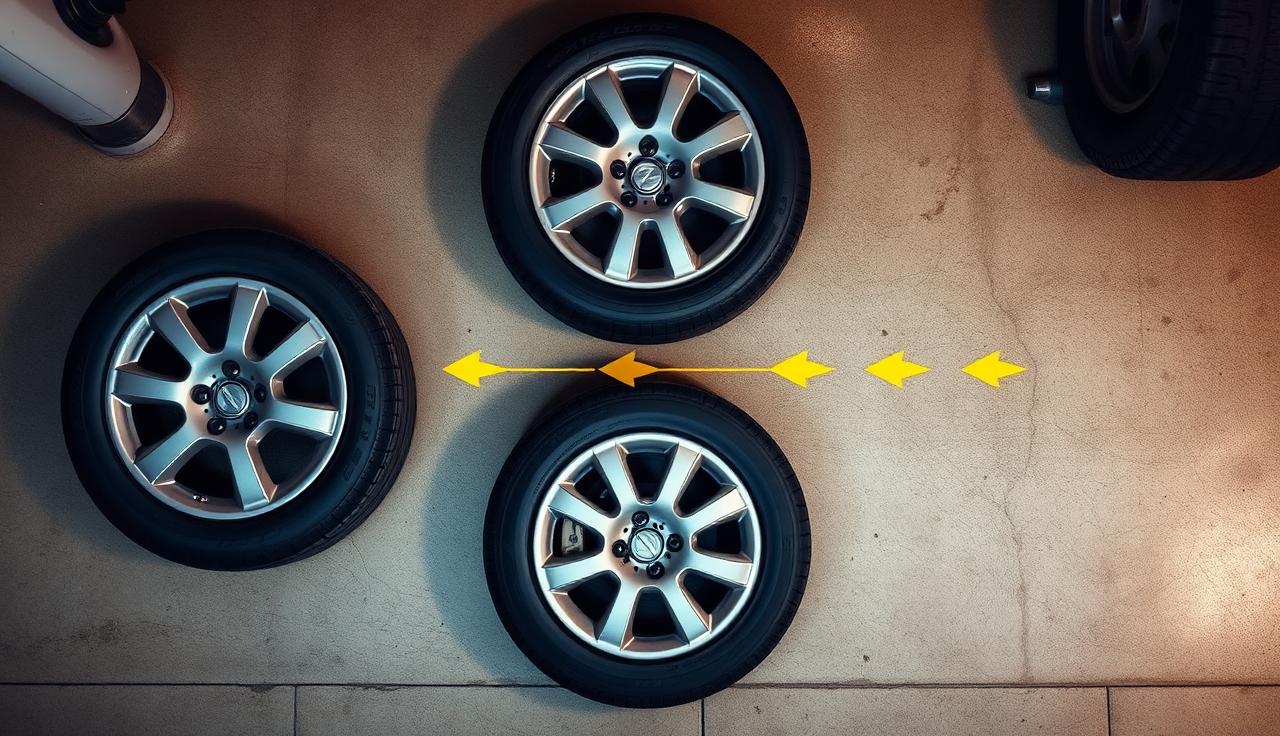
Understanding the correct tire rotation pattern is essential for maximizing tire life, maintaining balanced handling, and getting the most value from your investment. Different drivetrains place stress on different tires, so the rotation pattern you follow matters.
Why Tire Rotation Patterns Matter
Front tires on a front-wheel-drive car can wear up to twice as fast as the rears because they handle steering, braking, and power delivery. On rear-wheel-drive vehicles, the rear tires bear the acceleration forces. Without the correct tire rotation pattern, you'll end up replacing two tires long before the other two are worn — wasting money and compromising safety.
The NHTSA recommends rotating tires every 5,000 to 7,500 miles as part of routine vehicle maintenance. Regular rotation also helps preserve your tire warranty — most manufacturers require documented rotations.
Tire Rotation Patterns by Drivetrain
| Drivetrain | Recommended Pattern | How It Works |
|---|---|---|
| Front-Wheel Drive (FWD) | Forward Cross | Front tires move straight to the rear; rear tires cross to the opposite front |
| Rear-Wheel Drive (RWD) | Rearward Cross | Rear tires move straight to the front; front tires cross to the opposite rear |
| All-Wheel Drive (AWD/4WD) | X-Pattern (Cross) | Each tire moves diagonally to the opposite corner |
| Directional Tires | Front-to-Back | Tires swap front-to-rear on the same side only (tread is directional) |
| Staggered (different front/rear sizes) | Side-to-Side | Swap left-to-right within the same axle only |
Step-by-Step: How to Perform a Correct Tire Rotation
1. Check your owner's manual. Your vehicle manufacturer's recommendation always takes priority. Some vehicles with staggered wheel sizes or directional tires require specific patterns.
2. Gather your tools. You'll need a jack, jack stands (at least two), a lug wrench, and optionally a torque wrench. Never work under a vehicle supported only by a jack.
3. Loosen lug nuts before lifting. While the tire is still on the ground, break each lug nut loose with a quarter turn. This prevents the wheel from spinning freely on the jack stand.
4. Lift and swap tires. Follow the correct tire rotation pattern for your drivetrain from the table above. Work on one axle at a time if you only have two jack stands.
5. Torque lug nuts to spec. The Bridgestone tire rotation guide recommends using a torque wrench and tightening in a star pattern to the manufacturer's specification (typically 80–100 ft-lbs for passenger cars).
6. Check tire pressure. After rotation, verify each tire is inflated to the pressure listed on your driver's door placard — front and rear may differ.
How Often Should You Rotate Tires?
Most experts agree on a 5,000 to 7,500-mile interval. A simple rule: rotate your tires every other oil change. According to Consumer Reports, consistent rotation can extend tread life by 10–20%, saving hundreds of dollars over the life of the tires.
If you notice uneven wear developing between rotations — such as cupping, feathering, or one-sided wear — have your alignment checked. A misaligned vehicle will chew through tires regardless of rotation frequency.
Common Tire Rotation Mistakes
Skipping rotations entirely is the most common mistake, but using the wrong pattern is nearly as harmful. Putting directional tires on the wrong side reverses the tread design and severely reduces wet traction. Failing to re-torque lug nuts after 50–100 miles is another overlooked step that can lead to wheel loosening.
Frequently Asked Questions
Can I rotate tires myself at home? Yes, with a jack, jack stands, and a lug wrench you can rotate tires in about 30–45 minutes. Always use jack stands for safety — never rely on a hydraulic jack alone.
Does tire rotation direction matter? Absolutely. Directional tires have a specific rotation direction indicated by an arrow on the sidewall. Mounting them backwards dramatically reduces water evacuation and wet grip.
What if my front and rear tires are different sizes? Vehicles with staggered fitments (like many sports cars) can only rotate side-to-side within the same axle. You cannot swap them front-to-rear.
Is tire rotation included with an oil change? Many shops offer free or discounted rotation with an oil change. Retailers like Costco and Discount Tire typically include free lifetime rotations with purchase.